
Testimonials
The testimonials below are sorted based on most recent submissions. If you want to look at testimonials about a specific topic, please refer to the testimonials under each action.
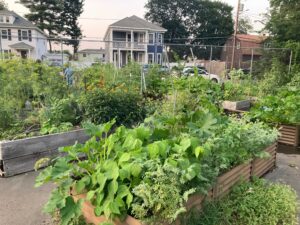
Ashland Community Gardens: Where Community Grows
Submitted by: Florence Seidell
There are several reasons why the Ashland Community Gardens has been a successful communal organic vegetable (and flower) garden in downtown Ashland for 14 years.
First, it is a peaceful and calming place where you can forget the rush and demands of the rest of the world. I love to walk around the 4 foot by 10 foot beds to see what other gardeners are growing.
We hold potlucks where people bring their favorite plant-based recipes. I have expanded my healthy recipe repertoire each season.
Volunteer “Green Hats” offer free mentoring. I have improved my gardening skills, thanks to the generous help of my fellow gardeners.
It is easily a place to develop friendships. Gardeners look out for one another and solve problems collectively.
Warning: there is a steady waitlist, so act soon. Join us “Where Community Grows”.
Reducing landfill waste
Submitted by: Rae Cobleigh
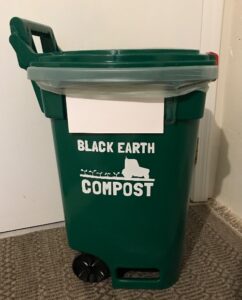
We signed up for Black Earth Compost as soon as the company offered curbside pickup service in Ashland, and we've been very happy with the service. We keep the compost bin in our kitchen for easy access. The bin's lid seals well, so we don't have to worry about smells escaping. The bin's lid is also easy to open with just the back of one hand, which is especially helpful when we've got our hands full of food waste from our cooking and kitchen cleaning adventures. 🙂
The liner bags are sturdy, and haven't broken. The bin is sturdy and well made. We put the compost out once a week, and we can lock the lid to keep animals out of the compost. Black Earth always sends reminders and communicates promptly about any pickup delays, and they've never missed a pickup. In addition, it's easy to buy more liner bags online when we need them, and Black Earth just puts the new rolls of bags in our bin after they've emptied it. We've been using this Black Earth Compost service for nearly 3 years, and we highly recommend it! It's a great way to divert a lot of our normal household waste away from a landfill and towards being reused. As a result, we need fewer trash bags.
One of our neighbors noticed our compost bin, asked about it, and has also signed up for Black Earth's service. She's been happy with the service, too. Since she has a smaller household, it means that she doesn't have to put out the regular trash every week anymore. She can put it out every other week, which saves her a lot of money on trash bags.
And we keep an eye out for each other. More often than not, our neighbor very kindly brings our emptied compost bin back to our house when she brings hers back home, too, so our compost bins have become an opportunity to connect with our neighbor more, in addition to being better for our environment! 🙂
Window Quilts
Submitted by: Charles Lidz
One of the ways we keep our house warm is that my wife has sewn window quilts. These have an insulated fabric covered by a mylar reflective fabric as the interior (you can get it at Joanne Fabrics) of the shade. She then sews a decorative fabric on the side facing the room and creates a roll-up shade. They work very well both for keeping the heat in during the winter and keeping it out during the summer. Some people have these shades set up with a little motor that is controlled by the sun. We just raise and lower them as we like. It gives us more flexibility.
Cool and Easy to Use
Submitted by: Florence Seidell
Cool and Easy to Use
After our gas stove started to have problems with its controls and the oven repeatedly set off our smoke alarms, we decided we needed a new stove. We learned about gas leaks and we decided to switch to an electric oven with an induction cooktop. We selected a basic 4 burner Frigidaire model FGIH3047VF. We did have to buy new pots and pans since our old aluminum ones did not work with the induction cooktop.
So far we have been very happy with the induction cooktop. It heats food very fast, has simple precise controls and the glass cooktop is not blazing hot and the temperature is easy to control. Surprisingly we can wipe the cooktop spotlessly clean promptly after using it.
We would definitely recommend making the change to induction cooking. Not only is it not using a fossil fuel gas, it is also much safer.
We also have no more problems with our smoke alarm going off when we use the oven. Hopefully, that did not happen because of leaking gas but was caused by the fact that the old oven was hard to clean. In any case we are happy with our new purchase.
Great experience using Black Earth Composting as a renter
Submitted by: Martha Coleman
My partner and I love to cook. We take pride in the fact that making our own meals allows us to reduce the amount of waste we produce. Unfortunately, when we first moved to Ashland, all our food scraps ended up in the trash alongside plastic bags and packaging destined for the landfill. It didn’t feel right that our onion skins, carrot ends, and apple cores were headed towards an environment where they couldn’t break down properly or return their nutrients to the earth. We figured there had to be a better solution, so we googled “Ashland Massachusetts composting” and found that composting was not only available, but easily accessible and affordable for us, even as renters.
Black Earth Composting. Those three words and the incredible company they represent reinvigorated the relationship my partner and I have with food and cooking as Ashland residents. For just $70 we got access to six months of weekly, curb-side compost pickup on the same day as our trash goes out. As renters, we are so grateful for how seamless it has been to incorporate this composting service into our lives. We also encouraged neighbors to add their scraps to our compost container because even on our busiest weeks we can’t come up with 7 gallons of food waste. I can’t stress this enough - it’s just so easy! And if that alone doesn’t convince you to sign on, did I mention that your annual subscription comes with a complementary bag of fresh, locally produced compost to use in the spring? There’s something so beautiful about that, and I can’t wait to share this nutrient-filled bounty with my friends and neighbors.
Solar Panels and Heat Pumps
Submitted by: Charles Lidz
When we lived in Maine for almost a decade, we lived in a super-insulated house that had 2 walls of 2X6s, effectively a foot think wall, filled with fiber glass insulation. It was heated with a single wood stove. It had solar hot water and windows facing South but no solar panels. The effectiveness of the insulation was amazing so, when we built our house in Ashland we did super-insulation, South facing windows and solar panels. In addition, we put in a wood stove and heat pumps, both to heat the house and for hot water. As my wife says, we pay for water and trash and nothing else. Indeed, Eversource owes us a lot of money because we generate much more electricity than we use. One extra expense is that, because the house is so tightly sealed, we have to run an air-exchanger so that the air does not get too stale. An air exchanger brings in outside air through piping that is right next to the indoor air being exhausted. The result is over 50% of the heat in the outgoing air is transferred to the incoming air. A neat trick

Easy Composting with Black Earth
Submitted by: Florence Seidell
We have been using Black Earth now for two years and it cannot be easier. They provide a link to their website where you can order the compostable bags for the rollable bin that we keep in our garage and for the small container on our kitchen counter. Black Earth drops off the bags when they pick up the compost. We were amazed by how much we could actually compost each week, including food scraps, coffee grinds, food-soiled paper towels, and more. It is all picked up at the curb reliably every Friday morning.
Since Black Earth partnered with Ashland and Holliston, we were very happy to hear that we reached the goal of 500 Black Earth customers together, which reduced the cost of weekly curbside compost pickup to $69.99 for 6 months and, most importantly, significantly reduced our use of orange trash bags.
Composting is Great!
Submitted by: Nina Ashurst
It feels great to be putting all my food scraps, coffee filters & tea bags into compost and my usual trash output is less than half of what it used to be!
Since I’m on their every other week pickup plan, I have Black Earth send me email reminders the day before I need to put my bin out at the corner.
EVs
Submitted by: Charles Lidz
In the fall of 2016 I bought a Chevy Volt, a plug-in hybrid that is all electric for the first 60 miles in warm weather locally and gets about 50 electric miles on the highway. It gets about 40 miles a gallon on the interstates when the battery is used up. I love it. It is much smoother and quieter than an gasoline car. Its downsides are that in the winter battery mileage drops about 25% and it does not do fast charging. Still, I have driven it 107,000 miles and it is still going fine. Unfortunately, Chevy does not make it anymore and the Toyota plug-in hybrids get fewer miles on their batteries.
Recently we bought a Hyundai Ioniq5 for our main car. It is amazing. Smooth, comfortable, and with so many features that we have not figured them all out yet. When we plan a trip beyond the range of the Ioniq5 we are still using my Volt and buy gasoline. I have a friend who has an Ioniq5 and worked out where he can charge at fast chargers when he travels. It does take planning but it is doable.
If you buy either an EV or a plug-in hybrid, it’s much easier if you can get a level 2 charger (faster than a simple connection to the household current but not as fast, or as expensive, as a “fast charger) installed where you live.
I Love My Hyundai Ioniq 6 SE!!
Submitted by: Nina Ashurst
It’s good for the planet, it’s great fun to drive, and it’s beautiful! I love that it’s extremely responsive, smooth-running, and quiet. It has a full-size trunk and it’s roomier than my old Mercury Milan hybrid because its big battery runs along the underside of the car. I plug it into my home charger at night and I’ve stopped planning when and where to buy gas.

Fabulous Farmers Market!!
Submitted by: Nina Ashurst
The organic produce, fresh baked goods, cheeses, eggs, meat, fish and flowers at Ashland Farmers Market are AMAZING!!
They're delicious, nutritious, local and beautiful! They also last a lot longer than produce from the supermarket. I can't wait 'til the market reopens in June!
Using Less Natural Gas
Submitted by: Nina Ashurst
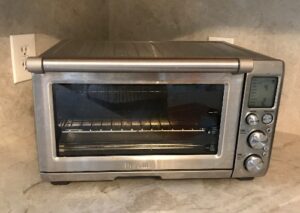
Although it's not induction cooking, I use my countertop toaster/oven for small meals instead of turning on the gas oven when baking and roasting. It saves on my gas bill and, since I get electricity through Ashland Town’s aggregated contract, it uses 87% green electricity.
Our Heat Pump Hot Water Heater Works Great
Submitted by: Florence Seidell
Since our gas water heater was leaking, we replaced it in 2022 with a heat pump alternative. The water tank does a great job; water is hot and plentiful. We went with an 80 gallon Rheem Ruud Pro Ultra unit with a slightly bigger tank because we have an indoor whirlpool to fill and it can take the water a bit longer to heat up than the gas option. The tank has automatic leak detection and Wifi connectivity.
The Tank was installed by New England Ductless in 2022 as part of the MetroWest Solar and Clean Energy Challenge. We were very happy with the pricing and the installation process.
The unit has been operating without problems and the humidity in our basement has been reduced substantially. We suggest you don't wait until your water heater fails. Plan for it and proactively replace it.

We love our Subaru!
Submitted by: Tessa Venell
We got one of the only ones they made of these beauties! I've always driven Subarus, so we were on a waitlist and I think they stopped making these. We get about 17 miles to the charge, but we also installed a home charger so we're able to do a lot of local trips on electric. And our electricity is renewable.

From Dead Grass to Flourishing Meadow In 3 Years
Submitted by: Kevin Kam
About three years ago I started reading about pollinator decline and, at the same time, was wondering what to do about a stretch of yard where grass didn't grow well. As a completely novice gardener, I had no idea what types of flowers were suited to my yard's particular situation. So I bought a pollinator flower mix from American Meadows, pulled weeds best I could and threw some seed over a couple of de-weeded spots and figured I'd go from there.
Here's the before shot from August 2022 where I had just a small vegetable garden with a tomato plant or two:

At the end of the first growing season (Sept 2023), I had some moderate success, with sunflower, black eyed susans and sulphur cosmos patches making an appearance:

Fast forward to this year, with now two additional years of knowledge and experimentation plus lots of yard time clearing dead grass, pulling new weeds, spreading additional seed and watering seedlings as they establish, my formerly neglected stretch of mostly dead grass is over a thousand square feet of flowering plants:

This picture is from late June after the black eyed susans popped. About 3 weeks prior to that, there was a long bloom of lanceleaf coreopsis that started in mid-late may. Further down the street you can see a hint of violet from the bee balm balm that was just starting to bloom, and in the foreground you can see one lonely bright orange butterfly milkweed establishing itself. Later in the season, the partridge pea, goldenrod, ironweed, aster, sunflower and cosmos will take the handoff from the black eyed susan and bee balm, ensuring flowers until frost. It's certainly a different look than a cleanly mowed lawn (you can have both!) but one that I think adds both visual and enviromnental benefit.
It was a lot of work on my part, so I'd be lying if I said that establishing a flower meadow is a low maintenance endeavor compared to just mowing that same stretch and calling it a day. My suggestion is to start small. I've had good success identifying a patch where grass grows poorly, cutting that patch as low as possible, covering that spot with cardboard or brown paper bags (or a leaf bag) and covering that with a bag or two of soil. That process kills the weeds and grass and establishes a new layer of fresh topsoil for the flower seed (start with a mix until you know what grows in your yard). Timing also matters, as many native plant seeds need a winter season to break down their seed shells, so read instructions to see whether your seeds would be better planted in the fall versus spring. With regular mainenance and watering during growing season, you'll likely have something from your mix start growing by May or June. The bees, butterflies and bugs will thank you!
The Tell-Tale Chart(s)–charts included!
Submitted by: Kevin Kam
The November edition of the Local Town Page Paper contains my article titled "The Tell-Tale Chart(s)." Lacking in the publication were the accompanying charts. The full article is pasted below.
A few months ago in this space we discussed the concept of the negawatt, which is the unit of energy that you don’t consume, and that the negawatt—not solar, wind, hydro or nuclear power—is the cleanest unit of electricity. Let’s take the negawatt concept one step further by considering that not every negawatt has the same environmental value because timing matters, too. Here’s a chart from the website of New England’s electric grid operator, ISO-New England, showing the total grid-based electricity consumption for the 48 hours starting at midnight Monday June 17.

The weather that Monday was mostly sunny with a high of 82 degrees, while Tuesday was the first day of a heat wave with high temperature of 92 degrees. Just from eyeballing the chart, you can see that electricity consumption rose significantly with the air temperature: peak demand on Tuesday was about 26% higher than on Monday, 21,750 versus 17,250 megawatts.
To meet the daily peak demand on Tuesday, the electric grid called on additional gas-fired power plants to run (or for those already on to burn even more gas) and also for an oil-burning plant to come online. In grid-speak, oil and gas were the “marginal fuels,” meaning each additional unit of electric use caused an equivalent increase in gas/oil consumption, leading grid-wide emissions to peak at 105 metric tons of CO2 per minute compared to about 66 metric tons per minute at the daily low. In contrast, the peak emissions on Monday were about 88 metric tons of CO2 per minute, and were 44 metric tons at the daily low. Notice that the emissions graph (the top line represents total emissions, the one slightly below represents emissions from gas plants) is essentially the same shape and magnitude as the power curve.

Imagine that these charts represented traffic on the Mass Pike, and you have a daily commute into Boston. All else equal, you would avoid the peaks as much as possible, right? Or, if commuting at peak hours were unavoidable, you would consider alternatives like the commuter rail or shared rides or telecommuting if possible, any way to avoid wasted time (or gasoline!) sitting in traffic.
Returning the conversation back to household energy, the suggestion here is to intentionally shift electricity consumption away from peak hours (or away from really hot days) by being flexible in running devices such as dishwashers, ovens, and washers/dryers, air conditioners/heaters and charging electric vehicles. As the emissions chart shows, a negawatt at peak hours results in about twice as much avoided emissions as an overnight negawatt on the same day, and potentially even more if you are able to shift consumption away from a heat wave.
While each of our individual actions has only a very small impact, intentional actions by a large group can make a difference; after all, what are these graphs but a real-time measure of the choices of our collective decisions to consume electricity?
Got a Washer/Dryer all in one
Submitted by: Robert Scherer
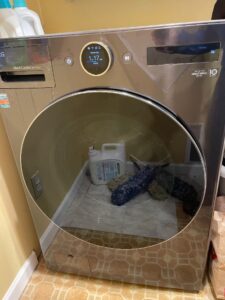
This all in one washer/dryer uses regular electrical outlet and air-source heat pump to wash and dry clothes in the same load. The total time can be over 2 hours, as the drying part does take longer than gas dryer, but you can do a load without having to reload into the dryer. We switched from a gas dryer.
We also use a clothesline for heavier materials like sheets and blankets in good weather or in interior space, as the air-source dryer takes longer than a gas dryer. Using a clothesline in general saves energy so we have been increasing our use of air-drying, when feasible.
When You Use Electricity Matters A Lot!
Submitted by: Kevin Kam
Summer is here, and we've already had two heat waves. Extreme weather situations cause us to use our resources very differently--hopefully the graphs and articles in this testimonial help you better understand how seasonal and weather variations have a huge effect on how we use energy and, as a result, have a huge effect on the cost of the electricity we use, the amount of pollution which results from that usage, and ultimately how you the humble consumer can reduce both.
In the shoulder seasons (spring and fall), electricity demand is relatively low because modest and comfortable temperatures lead to less use of heating and cooling. This article from the Connecticut Mirror explains how the seasonably cool and sunny conditions on Easter Sunday lead to an all-time low demand level on the New England electric grid. New England power demand fell to an all-time low on Easter The article undersells (IMHO) the real news here: behind-the-meter solar production (i.e. rooftop solar) peaked at an estimated 6,600 megawatts; at the same time, grid demand (i.e. production by the numerous big power plants around the region) bottomed at 5,318 megawatts—in other words, rooftop solar’s peak caused demand on the electric grid to be about 55% met by rooftop solar! For anybody who wonders whether you can make a difference, this is one shining example (pun definitely intended!) of the collective decisions of tens of thousands of homeowners to put solar on their roofs resulting in this record low demand.
I created some charts using the Iso New England website. This chart shows how low demand dropped on April 20. The darker orange line at the bottom is what the power provided by the large power plants, hitting bottom around 2pm. The lighter orage line adds in the estimated production from rooftop solar, which you can see picks up around 6am and stops around 7pm.
On the other end of the spectrum, grid demand hit a year-to-date high (by a long shot) on Tuesday June 24 amidst 100 degree temperatures across the region. This article from WBUR’s excellent climate reporter, Miriam Wasser, includes some interesting graphics and data showing how rooftop solar reduces the amount of electricity needed from fossil-fuel sources and therefore reducing the carbon and particulate pollution associated with burning the additional oil/coal/gas that is typically called upon at “peak” demand moments. How rooftop solar is helping New England stay cool during the heat wave | WBUR News.
Below is the same chart as above except for June 24. A couple of observations and comparisons to the April 20 chart. First, the shape of the power curve is completely different, with the daily bottom occuring around 4 am with demand ramping up all day to the peak at about 6:30 pm. Also note the difference in the level--the 4am grid demand was about 15,400 megawatts on June 24, versus the 11,900 peak at 7 pm on April 20. Also note the interesting shift in the daily peak, where grid-provided electricity peaked at 6:30, but overall usage peaked around 4 due to about 4 megawatts of rooftop solar filling in that gap.
As I mentioned at the opening, the cost and pollution difference between April 20 and June 24 were also huge.
Here are the charts of estimated carbon emissions (particulate pollution is completely separate) and locational marginal pricing (LMP is not literally the wholesale price of electricity, but it's close enough for our purposes) from April 20. You will see that carbon emissions hit a bottom of about 20 metric tons per megawatt, holding that bottom from about 10am to 3pm at which time rooftop solar was hitting peak production. You will also see that LMP briefly hit a peak of $62 at 8pm but fluctuated between $15 per megawatt and negative $50 per megawatt between 9am and 3pm when rooftop solar was meeting up to 55% of our collective electric demand. Yes, negative $50--this was the grid operator's price signal that any power plant with the ability to shut off would be paid handsomely to do so.

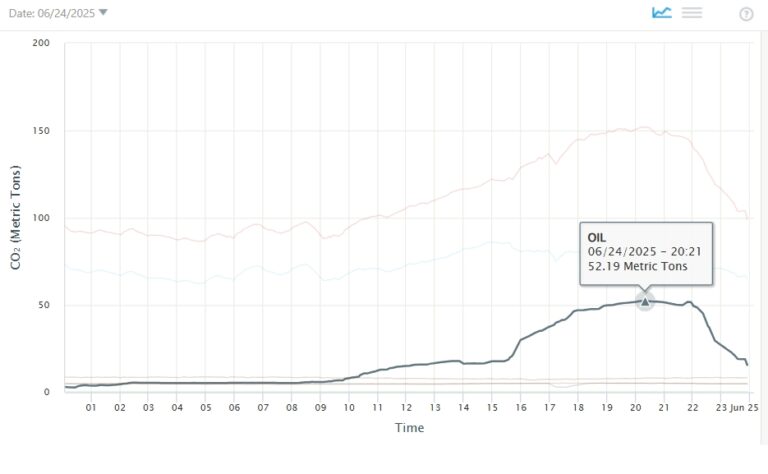
In contrast, here are the carbon emission and LMP charts for June 24 when peak emissions hit about 152 tons per megawatt, 7 times greater than the April 20 bottom and 3.5 times the April 20 peak. A lot of that additional pollution was from oil burning peaker plant(s) that came online and really ramped up from about 3pm to 9pm which you can see in the gray line in the emissions chart which peaked at 50 tons per megawatt in that timeframe. Oil-burning plants are typically too expensive a resource to operate during normal conditions, and so they only fire up infrequently--which is exactly why avoiding consumption under those abnormal conditions is so valuable in avoided cost and pollution. At the peak, Oil was producing about 32% of total carbon emissions while only generating about 12% of the electricity--not a good ratio, and which does not account for the non-carbon pollution also caused by burning oil.
Remember the negative $50 price signal from April 20? What about a $1,560 per megawatt price signal to incentivize an otherwise too-expensive oil plant to fire up at 5:40 on June 24? That plateau of about $1,000 lasted until about 8:30pm, when it fell to about $250 at 9:30pm and finally back to the day's $60 baseline around 10pm. Comparing the two days, the baseline LMP on June 24 was the (brief) peak price on April 20, and then there's the $1600 LMP difference between peak on June 24 and bottom on April 20. So that begs the question: how does that affect the price we pay for electricity? In the short run, it doesn't because almost everybody has a fixed supply price contract; however, the wholesale cost of electricity eventually gets passed through to all of us eventually. Remember how electricity supply prices jumped in 2022-2023, in delayed response to a certain world event in February 2022 which caused chaos in gas markets? (chaos in other ways too, but that's beyond the scope of this testimonial).
This website being focused on actions, here's our suggestion: shave the peak! Our friends at Green Energy Consumer Alliance offer an email alert for days when reducing peak demand is particularly impactful. Hot Days Ahead! Time To Shave The Peak. Think of the electric grid like a highway—just as you would want to avoid the aggravation of driving to Boston at 8am on a typical weekday if at all possible, so too would you want to avoid consuming electricity at peak times everyday but especially amidst heat waves or major cold snaps. While true that the aggravation of sitting in traffic is more tangible than the aggravation of increased air pollution (unless you or someone you know has respiratory conditions), the added power costs and additional pollution is expensive, we just don’t necessarily directly see it.
Speaking of solutions, with the end of 30% federal tax credit on solar pv installations basically guaranteed, Massachusetts just passed an emergency regulation implementing a new solar incentive effective immediately. See the details here: Massachusetts solar incentives bolster industry facing… | Canary Media. Oddly, certain key details like the compensation rate for new installations are still to-be-determined. This bears watching, but is likely to be an improvement over the expiring SMART incentive which has been zero or close to it due to the increased cost of electricity in the last few years.
This was longer than I intended, but as the saying goes, a picture is worth a thousand words. My suggestion is simple: think ahead so you can time your electricity consumption to avoid peak times whenver possible and to coincide with ideal times, like when temperatures are seasonally mild and the sun is shining. With practice, it becomes a habit. If you can defer or avoid running your dishwasher, charging your car, cooking a meal (have a salad on a hot day!). If you have a programmable thermostat, maybe you can pre-cool your house so that your air conditioner is not starting to cool at 5pm when your house has already run up to 80 degrees. All of these things matter, because after all, isn't grid demand merely the sum of all of our decisions to use electricity?


My plug-in-hybrid experience
Submitted by: Kevin Kam
Plug-in-hybrids (PHEV) can be a useful first step in electric vehicle ownership. I hope my example will help convince someone who is not quite sold on a fully-electric vehicle right now but is open to the idea and willing to give a PHEV a try.
I bought my PHEV new in August 2020. It has a 10 kilowatt hour battery and EPA rating of 28 miles of all-electric range; in gas-only mode it is EPA rated at 39 mpg combined city/highway. I typically drive all electric around town and use gasoline only when I need to maintain speed on certain uphill roads, when I am driving on highways, and on road trips.
I typically set the car's timer to charge between 2am and 4am. Overnight charging accomplishes two goals that are important to me: 1) electric grid demand is typically at its overnight low at that time which means the grid is likely emitting a below-average amount of pollution (the grid is typically dirtiest at the evening peak, usually between 5pm and 7pm); and 2) charging overnight in the garage is more convenient than going to the gas station every few weeks.
In 2023, I drove my PHEV about 13,000 miles and consumed about 75 gallons of gasoline. Applying the EPA rating of 39 mpg across 75 gallons of gas, I estimate about 3000 miles driven on gas and so estimate 10,000 miles driven on electricity, much of which was the result of overnight charging. I estimate that by driving 10,000 miles on electricity, I displaced 250 gallons of gasoline consumption with electricity obtained from the grid at its (relative) cleanest and cheapest point (if you want to nitpick, the grid is having increasingly frequent days when rooftop solar causes the midday low in demand to be cleaner and cheaper than the overnight low, so charging from about 10am to 2pm on a sunny day may be even more advantageous-‘Duck curve’ days becoming more frequent as solar power spreads - ISO Newswire)
I think of my situation like this: I've got an electric vehicle about 75% of the time, and a hybrid 25% of the time. Because I can charge in my garage and because I might have only one or two long road trips per year, I don't have any of the "range anxiety" that seems to be the most-commonly mentioned reason why people won't consider owning an electric vehicle. By having a car that can plug in and trying to charge whenver I can, I am now very familiar with the charging stations located convenient to my day-to-day travel, and with using phone apps (I recommend plugshare) to find chargers. Because of this familarity, my eventual switchover to fully-electric driving will be very easy (and increasingly easier as more chargers get built).
Zero Percent Loan For My Heat Pump
Submitted by: Kevin Kam
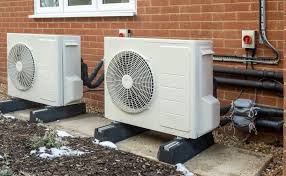
One incentive that I think doesn't get enough attention is the Mass Save HEAT loan (0% Interest Financing | Residential | Mass Save). As indicated in the link, you can get a zero percent loan for qualified efficiency upgrades including the cost of a heat pump installation.
I had a heat pump installed a few years ago, got a HEAT loan for the $17,000 cost of my heat pump at 0% interest for 7 years, resulting in 84 monthly payment of about $215. At today's rates of about 7% for home equity loans, the same $17,000 would result in a monthly payment of about $300, so the HEAT loan is saving me about $85 a month for the life of the loan. If you'd rather think of the upfront cost savings, I estimate the HEAT loan was equivalent to a $5,000 upfront discount, or about 29% of my upfront cost. Keep in mind that the HEAT loan value is in addition to the current Mass Save rebate which could be as much as $16,000 and federal tax credit of up to $2,000. (Air Source Heat Pumps | Residential | Mass Save)
So my advice: make sure you (or your installer) understand the after-incentives cost of a heat pump installation because that high upfront cost could be reduced by 80% by stacking the available incentives.

Love of Native Ferns (and other wildflowers…the ecosystem…nature!)
Submitted by: Diana Griffin (per/they)
I started a Bluesky page to share about my love of nature: My MTH Friends & Kin. (You can see it without having an account. Copy and paste this into your URL: https://bsky.app/profile/mymthfriendskin.bsky.social)
One recent post was about Ferns:
Ferns are my friends & kin because kin start as cute, tightly curled-up fuzzy fiddleheads; later kin open up wide and majestically. Coming in a lot of varieties, ferns are easy to grow and maintain. Who doesn't love ferns?
We go to Garden in the Woods (www.nativeplanttrust.org/visit/garden-woods) in Framingham, a lot (I highly recommend joining and going often). I took the pictures shown at GIW (but I have these and/or many more species of ferns in my gardens in Ashland too): Ostrich Fern (1st & 4th), American Royal Fern, and Northern Maidenhair Fern.
I'm also doing lots of photography and posting on iNat (See www.inaturalist.org, dagtrees). I love to help others get started learning and supporting Community Science on iNat too. Contact me if you want support!
Happy gardening!
Diana (per/they)

Improving Ashland High School’s Sustainability Profile: Eagle Recycling Project
Submitted by: Nathan Gerlovin
One thing I realized as a student at the Ashland Public Schools is that the cafeterias, gymnasiums, auditoriums, and fields often lack a place to recycle empty bottles. As a Boy Scout looking for a way to improve the town's sustainability profile, I decided to use my Eagle Scout Project as an opportunity to improve recycling in my community.
Working with the Ashland High School Principal, Ms. Kelly St. Coeur, and the Ashland Sustainability Program Manager, Ms. Samantha Riley, we came up with a plan for me to create a receptacle for recycling and composting inside the high school. Unfortunately, the Ashland School Committee wasn't ready for composting in the schools yet, but the idea of a durable, aesthetic, and mobile structure to hold recycling bins for the cafeteria, gymnasium, and auditorium was approved -- given it was made of composite materials.
After finalizing my designs and leading a fundraising effort for over $2500 of materials needed to build the structure (a huge thank you to Ashland Lumber, TLC Painting, Lowe's Milford, Monnick Supply, and family), I led a team of Boy Scouts to construct and install the receptacle at the High School in late Fall of 2024. The recycling bin will be emptied by student volunteers in the AHS Environmental Action Club.
Improving the sustainability of the Ashland Public Schools is important and I am hopeful that the recycling structure that I built will be the first of many.

distance traveling in an EV
Submitted by: Charles Lidz
If you have an EV it is very helpful to have an easy access to level 2 charging at home or work or nearby to someplace you spend a lot of time. But if you want to travel a long distance, you will need access to fast chargers. If you have a Tesla, that is not usually a problem since they have a network of chargers across the country. In theory they will be open to all soon and some of them are usable for non-Teslas now. Me, I won't buy one due to the actions of their CEO but that is another story.
There are several aps you can get on your cellphone that really help. My favorite is ABRP. It quickly gave me a dozen stations that I could use to get to visit my in-laws in southern Ohio. Electrify America has a broad network of reliable stations and you can get information about all of them on their ap. EVgo has a lot of charging stations although they are not the most reliable. Still, their ap is another way of checking what is available.
We are not yet at the point where recharging an EV is as easy as getting gas but it is no longer impossible to go long distances, it just takes planning
Shifting to Sustainable Takeout Containers: A Call to Action for Ashland
Submitted by: Ashwin Ratanchandani
As a resident of Ashland for 24 years, I’ve watched our town make great strides toward sustainability, from the 2018 plastic bag ban to our ambitious Net Zero Resolution, which aims to eliminate greenhouse gas emissions by 2040 and the recent formation of Energize Ashland. However, when it comes to the environmental impact of takeout containers, Ashland still has work to do. Unlike many neighboring communities, we still allow Styrofoam and black plastic—materials that harm the environment and are difficult to recycle. By transitioning to sustainable alternatives, our businesses and residents can help reduce waste and build a cleaner, greener future.
The Problem with Styrofoam and Black Plastic
While convenient and sometimes cheaper, Styrofoam and black plastic carry significant environmental and health risks:
- Styrofoam: Non-biodegradable and difficult to recycle, Styrofoam can persist in landfills and oceans for centuries. It also contains styrene, a chemical linked to potential health risks, especially when in contact with food. Styrofoam is easily blown around due to its lightweight nature, often ending up in waterways.
- Black plastic: This material is nearly impossible to recycle, as sorting systems can’t detect it. Like Styrofoam, black plastic can also leach harmful chemicals when exposed to heat, raising health concerns. Since black plastic is rarely recycled, it contributes heavily to the global plastic pollution crisis. Plastic does not biodegrade—it only breaks down into microplastics, which can infiltrate the food chain, posing risks to both wildlife and humans.
Why Switch to Sustainable Containers?
Switching to sustainable containers offers numerous benefits:
- For businesses: Sustainable packaging can improve brand image, boost customer loyalty, and prepare businesses for future regulations. While there may be upfront costs, many businesses find long-term savings through bulk purchasing or local incentives.
- For residents: Sustainable containers eliminate health risks associated with chemical leaching and reduce waste in our community. Supporting businesses that make the switch contributes to a cleaner, healthier Ashland.
- For the environment: Biodegradable or compostable containers break down more quickly, reducing the strain on landfills and lowering our overall carbon footprint.
The Challenges We Face
The transition to sustainable packaging isn’t without its challenges:
- Cost: Eco-friendly containers are often more expensive than Styrofoam or plastic, especially for small businesses. However, long-term savings and potential municipal incentives can help.
- Durability: Some sustainable containers may not perform well with certain food types, such as hot or greasy items. Businesses will need to explore options that fit their needs.
- Consumer habits: Encouraging customers to bring reusable containers or embrace compostable options will require education and time to shift behaviors.
- Availability: Sourcing sustainable packaging options may also present a challenge, especially for smaller restaurants or businesses that rely on local suppliers.
- Municipal support: Collaboration between businesses, residents, and the town will be critical. Towns that have successfully implemented these transitions, such as Brookline and Cambridge, have relied on clear communication, local government support, and resources for businesses to ease the shift.
Learning from Other Towns
Several towns in Massachusetts have already made the switch to sustainable packaging, offering examples Ashland can follow:
|
Town |
Year of Implementation |
Key Actions |
Outcomes |
Support for Businesses |
|
Brookline |
2013 |
Banned Styrofoam containers; encouraged alternatives like paper, aluminum, and compostable containers. |
Significant reduction in Styrofoam waste. |
Provided grace period and resources to find alternatives. |
|
Cambridge |
2016 |
Banned all polystyrene food and beverage containers. |
Reduced litter and plastic pollution in waterways. |
Educational campaign with guidance on sourcing materials. |
|
Somerville |
2018 |
Banned polystyrene; enforced compostable and recyclable containers. |
Balanced environmental goals with business needs. |
Partnered with environmental organizations for resources. |
|
Newton |
2020 (Expanded in 2024) |
Banned polystyrene containers, black plastic, and single-use plastic stirrers; expanded ordinance to include non-recyclable containers. |
Expected reduction in single-use plastic waste and improved environmental health. |
Extensive collaboration between the city, businesses, and environmental groups to address concerns |
What You Can Do
Beyond town-wide initiatives, residents can take simple steps to reduce waste and promote sustainability:
· Use reusable containers and bags: Bringing your own when ordering takeout or shopping can significantly cut down on single-use plastics. Many local businesses welcome reusable containers, especially for beverages and leftovers.
· Choose compostable options: Support businesses that have already made the switch to eco-friendly packaging. When given the choice, opt for products that are compostable or biodegradable. You can also start composting at home—either through a backyard system or a service like curbside composting, from Black Earth (Ashland residents get a discount).
· Reduce overall waste:
Avoid single-use plastics: Skip items like plastic straws, stirrers, and disposable utensils unless absolutely necessary.
Shop in bulk: Purchase food and household items in bulk to cut down on packaging waste.
· Recycle effectively: Make sure you're familiar with what can and cannot be recycled under Ashland's waste management guidelines to avoid contamination.
· Get involved: Get involved with local sustainability efforts like Energize Ashland. Share what you are doing and be vocal about your choices.
If you are passionate about this topic, we would like to hear from you. By making these small changes in our everyday lives, we can support Ashland’s sustainability goals and work together to build a healthier, more sustainable future.
A Picture Is Worth A Thousand Words
Submitted by: Kevin Kam
The old saying is that a picture is worth a thousand words. Well, here’s a picture showing wasted energy:

The primary culprits here are window and door frames, and double whammy for the glass portions of the door, but this house appears to be well-insulated overall. You can check how drafty your house is with the thermal imaging camera available at the Ashland Public Library. I borrowed it this past January, and on a 35 degree day, found a few interesting leaks: even though my windows are double paned (and thus considered “efficient”, maybe even Energy Star rated), the gap top and bottom frames was reaching temperatures as low as 38 degrees because of some worn insulation. I also found that, even with the flue closed, my chimney was also letting outside 37 degree air circulate.
While I haven’t yet replaced the windows or sealed the chimney, seeing the extent of cold air infiltration lead me to call Mass Save to schedule a contractor to perform a free home efficiency audit. The contractor found that my attic insulation level was about standard for 20 years ago, but close to half the current standard for new construction.
3 weeks later, I had the contractor air seal the attic, add another 8 inches of insulation, and fill empty space in an exterior wall which had previously had an issue with frozen pipes due to insufficient insulation. Total cost was about $4500, but after Mass Save rebate, $1200.
I can report that my house was much more comfortable this summer despite extended stretches of high humidty and a few heat waves. My heat pump seemed to be consistently at a lower operating level, often only running to dehumidify rather than actively cool. Hoping that I see similar results this winter!