How do we become more mindful about our consumption?
First, make a conscious commitment to think through each potential purchase and identify whether it is a “need” or a “want.” Try a 30-day “Buy Nothing” challenge; then reflect on your experience and think of ways to incorporate ideas gained into your life permanently. Some other ideas:
• For three months, write down things you would normally order online; at the end of that time, consider whether you actually do need those things.
• Commit to purchasing secondhand, and purchase new only if what you need is not available used. Local thrift stores and consignment clothing stores offer secondhand clothing and household items in good condition at deeply discounted prices. Facebook Marketplace and Craigslist Boston Metro West, and Freecycle offer many used items for sale or for free.
• Commit to buying no new clothes for six months. Stick to the motto “Use it up, wear it out, or do without.”
• Tailor, repair, or mend clothing or apparel items; find a neighbor or local tailor if you need help!
• Check out local repair services or volunteer “repair clinics/cafes,” or search online for how to repair items before buying new.
• Let friends and neighbors know you welcome sharing! Borrow or share tools and equipment with them; start a lending club or a sharing program, such as the Buy Nothing Project.
• Find inspiration from articles or blogs by others who have experimented with buying less (search “buy nothing challenge”).
• Be sure to sell or donate unwanted items for others to use, to keep them out of the landfill & pay it forward.
• Remove yourself from merchant mailing lists to avoid temptation!
• Consider tips from additional sources, such as:
• “How green are you? A beginner’s guide to climate responsibility,” by Karen Campbell, Globe Correspondent, Boston Globe, April 21, 2021, posted by Mothers Out Front.
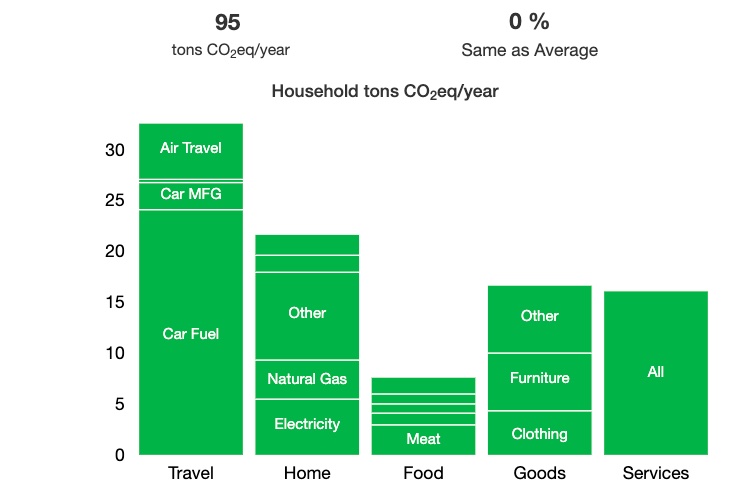
You can use the CoolClimate carbon calculator to see what your household purchases may contribute to carbon emissions. The chart below indicates what an average Ashland household is responsible for in terms of carbon emissions related to purchases: roughly 4.4 tons from clothing purchased each year, 5.7 tons annually for furniture purchased, and another 6.7 tons per year from other goods. This totals to roughly 17.5% of the total carbon footprint of the average family:
Other sources of information on carbon emissions related to purchasing decisions:
• This Cooler/Smarter site by the Union of Concerned Scientists asks questions about your buying habits (based on data found here) to help people identify their emissions and target actions for reduction.
• You can learn more about the carbon footprint of your clothing with ThredUp’s Fashion Carbon Calculator.